“We have nothing in common anymore.”
It’s one of the most common things I hear in my work as a couples therapist. Two people sitting across from each other, confused and a little heartbroken wondering how they got here.
They used to finish each other’s sentences. They used to want the same things. And now one person is training for a half marathon while the other prefers quiet weekends at home.
One has developed a passion for cooking elaborate meals while the other is happy with takeout. Life moved forward, and somehow it moved them in different directions.
So the question becomes, does that mean we’re incompatible?
It’s an understandable fear. We’ve been sold a version of love that looks like perfect alignment- same values, same hobbies, same vision for every Saturday morning. And when reality doesn’t match that picture, it can feel like something is wrong. But in my experience, what sounds like a compatibility problem is almost never really about compatibility at all.
What’s really being asked
When couples come to me with concerns about having grown apart or having nothing in common, what’s underneath those concerns is rarely about hobbies or habits. Strip it back and what you usually find are much deeper questions:
- Does my partner still accept me for who I am?
- Does my partner see me- the real me?
- Am I still loved even as I’ve changed?
There are questions of acceptance and connection, not compatibility. And that distinction matters enormously because it changes where you look for the answer.
Differences are not the problem
Here’s something that might surprise you: having different interests and habits is not only normal in long-term relationships, it can actually be healthy.
The goal of a relationship was never to merge into one person. It was never to love all the same things, want all the same experiences, or stop growing as individuals. In fact, maintaining a sense of who you are outside your relationship is one of the markers of a strong partnership.
The right relationship doesn’t ask you to give up your individuality. It honors it. It makes space for you to pursue what lights you up, even when your partner does not share the same passion.
So the question isn’t do we like the same things? The question is in the midst of our differences, are we still connected?

Curiosity as a form of love
Think about the last time your partner came home excited about something- a podcast they’d been listening to, a project they were working on, a new interest they were exploring. Did you lean in? Were you genuinely curious about their world, even if it was not your world?
That curiosity- that genuine interest in your partner’s inner world and experiences is one of the most underrated forms of love. You don’t have to share every interest. You don’t have to be a hiker because your partner loves hiking.
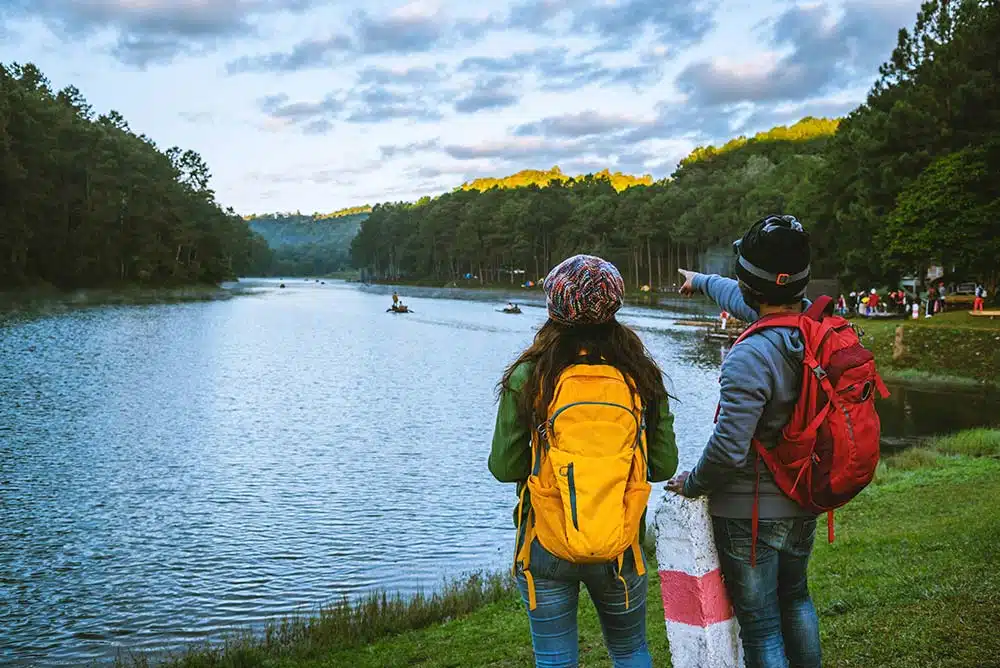
But, are you willing to ask about the trail? Are you willing to listen when they come back tired and happy and full of stories? Are there moments where you lace up your boots and go with them, not because hiking is your thing but because they are your thing?
We are not required to love what our partner loves. But what sets lasting relationships apart is care, understanding, and curiosity for the other’s world. That curiosity is what keeps two people connected even as they grow and evolve.
Growing individually vs growing apart
There’s a strong distinction worth naming here, because many couples confuse the two.
Growing individually means you are each continuing to develop interests, friendships, and experiences that are your own. You bring energy and life back into the relationship from those experiences. You have things to share, perspectives to offer, stories to tell. This is healthy.
Growing apart looks different. It’s when the emotional connection starts to thin. When you stop being curious about each other. When you’re in the same room but are no longer reaching for each other. When you stop trying things together or building new shared experiences as a couple.
One is about individuality. The other is about disconnection. And if you’re feeling the latter, the answer isn’t to suddenly share all the same hobbies- it’s to rebuild the emotional bridge between you.
It’s not always what you’re doing- it’s who you’re with
One of my favorite things to remind couples is this: it’s not always about what you are doing, it’s about who you are with in the process.
Some of the most connected couples I work with don’t share many hobbies at all. But, they show up for each other. They try things. They build their own rituals and routines that belong just to them- a Saturday morning coffee ritual, a Sunday drive, a shared TV show that’s become their thing. They experiment and find what works, and they stay curious along the way.
And sometimes- yes- one partner goes on the hiking trip with their friends, and the other stays home. The question isn’t whether you did it together. The question is: did your partner support you going? Were they happy for you when you came back? Did they want to hear about it?
That is connection. That is acceptance.
Questions to ask yourself
If you’re sitting with concerns about compatibility in your own relationship, here are a few questions worth reflecting on:
- When my partner shares something they’re excited about, do I engage with genuine curiosity?
- Are we willing to try new things together, even with some experimentation?
- Do we still gravitate toward each other even when we’re doing different things?
The real question
Compatibility is not about sameness. It never was. It’s about two people choosing each other- choosing to stay curious, stay connected, and stay willing. It’s about feeling valued and appreciated, not in spite of who you are, but because of it.
So if you’re wondering whether you and your partner are still compatible, I’d invite you to ask: Are we still accepting each other? Are we still curious about each other? Are we still choosing each other?
Because if the answer is yes- or even if we want it to be- that’s not incompatibility, that’s a relationship worth investing in.
This post was developed with the help of AI writing tools, based on my own clinician experience and perspectives.